
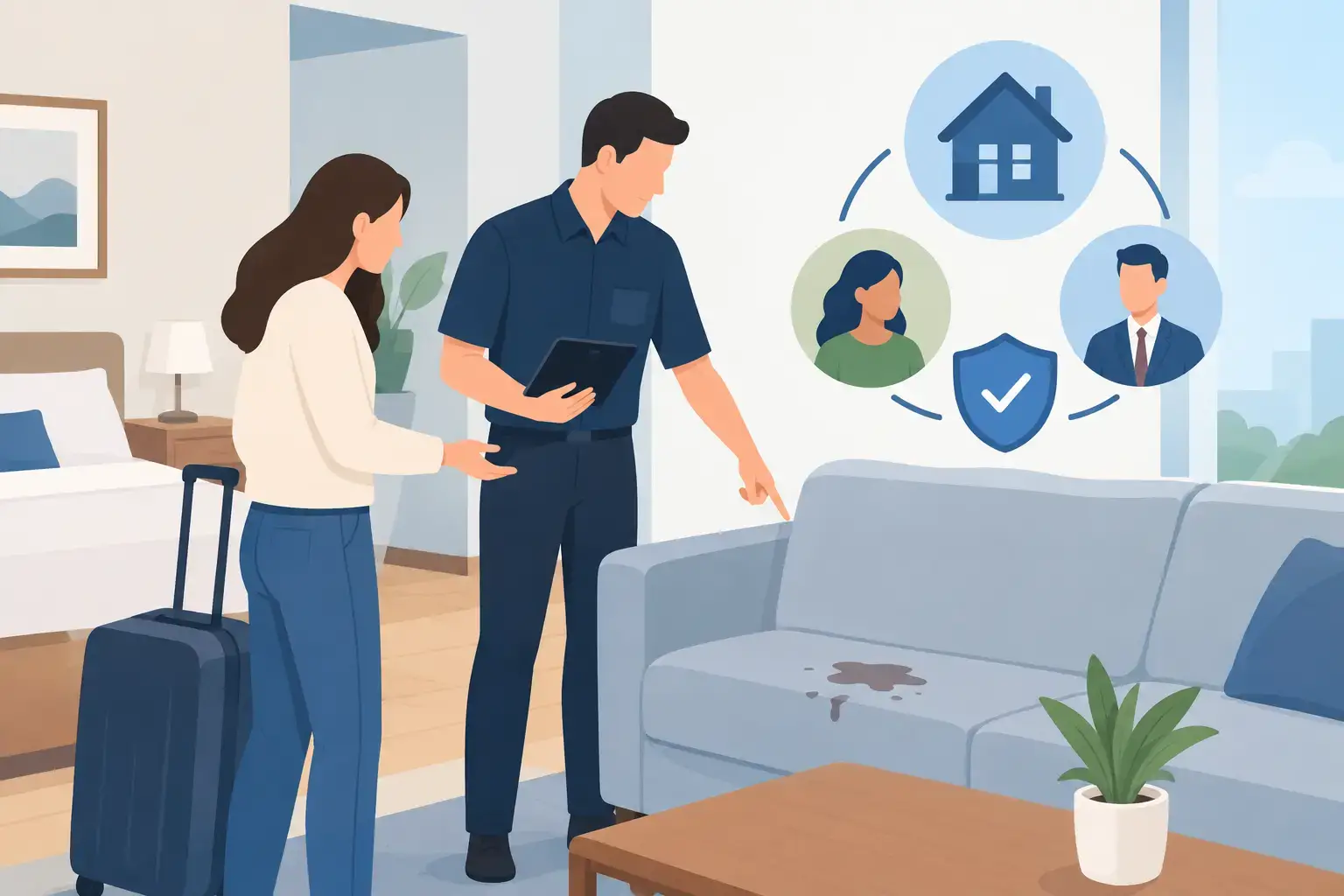
A broken dining chair, stained bedding or missing key can quickly raise the same question: who handles guest damages? In professionally managed serviced accommodation, the answer is rarely as simple as sending a bill to the person who stayed. The booking terms, the evidence available, the booking channel and whether a company made the reservation all affect how a fair claim should be handled.
For guests, corporate bookers and property owners, the best outcome comes from a clear process. Genuine damage should be resolved promptly, while ordinary wear, pre-existing issues and unsupported claims should not become a source of dispute.
Who handles guest damages in a serviced stay?
The accommodation operator or managing agent normally leads the process. They inspect the property, gather evidence, communicate with the guest or booker, and decide whether a charge is justified under the booking terms. Where a property is listed through an online travel platform, the operator may also need to submit the claim through that platform’s resolution process.
The guest may be responsible for damage caused by them, their visitors, children, pets where permitted, or anyone staying under their booking. If an employer or contractor company booked the accommodation, the company may be the contractual booker and may need to deal with the operator first. It can then address any recovery from the employee under its own policies.
For landlords using a management service, the managing agent should be the first point of contact. A landlord should not need to negotiate directly with a departing guest or pursue a claim without the information needed to support it. Good management means handling the operational work while keeping the owner informed of material costs, repair decisions and any recovery made.
Responsibility still depends on the facts. A guest should not be charged for a faulty appliance that fails during normal use, a worn item reaching the end of its life, or damage that was present before check-in. Equally, accidental damage is still damage. A fair process focuses on what happened, what it cost to put right and what the booking agreement says.
Start with evidence, not assumptions
Most guest damage disputes become difficult because the condition of the property was not properly recorded. Reliable evidence protects every side of the booking.
Before each arrival, the operator should carry out a documented check. Dated photographs or video, an inventory for key items, and maintenance records create a useful baseline. After departure, the housekeeping or inspection team should report any issue quickly, with clear photographs and a note of when it was found.
The strongest claims show four things: the item was in good condition before the stay, damage was identified after the stay, the damage goes beyond normal use, and there is a reasonable cost to repair or replace it. A vague statement that something is damaged is unlikely to help a guest understand the issue or a booking platform assess a claim.
Timing matters too. A report made weeks after checkout is harder to link to one booking, particularly where there have been other guests, cleaners, contractors or maintenance visits. Inspections should therefore be completed as soon as practical after departure and before the next check-in.
Normal wear is not guest damage
Serviced properties experience more frequent use than a standard long-term let. Marks on a hallway wall, tired towels, loose hinges, ageing mattresses and everyday scuffs can be part of normal wear and tear. These costs should be anticipated as part of operating a furnished short-stay property.
Guest damage is different. Examples may include a smashed window, a burn mark on a worktop, excessive cleaning caused by an unauthorised gathering, a missing television remote, or a lock requiring replacement because keys were not returned. The line is not always obvious, which is why proportionate judgement is essential.
A small mark may be better resolved through routine maintenance rather than a charge. A major incident may require an immediate response, emergency repairs and a more formal claim. The aim is not to charge for every imperfection. It is to return the property to the condition reasonably expected for the next guest.
How deposits, card details and platforms affect a claim
The route for recovering costs depends on how the stay was booked. Some direct bookings include a security deposit or pre-authorisation on a payment card. This can provide a defined process, but it does not give an operator unlimited authority to take money. Any deduction should be supported by the agreed terms, evidence and a reasonable calculation.
Bookings made through Airbnb or another platform may be subject to that platform’s damage protection and claims procedures. Requirements can include reporting within a set period, providing invoices or quotations, and giving the guest an opportunity to respond. Operators should follow the platform’s rules carefully rather than treating a claim as an informal arrangement.
For corporate accommodation, a company may prefer consolidated invoicing and a named person to approve any damage-related costs. This is often more practical than contacting an employee who is working away from home or has already moved to another site. The booking confirmation should make clear who is responsible for the reservation, how incidents will be reported and who can authorise payment.
Insurance may help with larger losses, but it is not a replacement for good evidence or sensible property care. Policies often have excesses, exclusions and reporting requirements. An operator should consider the cost of the repair, the likely recovery route and whether an insurance claim is commercially worthwhile.
A fair process for handling damage
Once an issue is identified, communication should be factual and prompt. The guest or corporate booker should receive a clear explanation of what has been found, when it was discovered and what evidence is available. If the issue has affected the next booking, such as a damaged bed or broken boiler, this should be explained without exaggeration.
The proposed charge should reflect a reasonable repair cost where repair is possible. Replacement may be appropriate for an item that cannot safely or practically be repaired, but charging the full cost of a brand-new item for an older, heavily used item may not always be fair. Age, condition and remaining useful life matter.
A well-managed claim usually follows a straightforward sequence:
- Inspect the property promptly after checkout and secure photographs, reports and relevant receipts.
- Check the booking terms, inventory and payment method before making a charge or submitting a platform claim.
- Tell the guest or booker what has been found and give them a reasonable opportunity to respond.
- Agree payment where possible, or use the agreed deposit, card or platform process with supporting evidence.
- Arrange repairs quickly so the property remains safe, presentable and available for future stays.
This approach is particularly useful for contractor and workforce accommodation. Teams may move between sites quickly, and a delay can make it difficult to establish what happened. A named contact, clear house rules and fast reporting reduce unnecessary administration for both the company and the accommodation provider.
What guests and corporate bookers should do
Guests can protect themselves by reporting existing damage as soon as they arrive. A quick message with photographs is usually enough and avoids uncertainty at checkout. They should also report accidental breakages during the stay rather than hoping they will not be noticed. Early notice gives the operator a chance to arrange a repair and can prevent a minor issue from becoming a larger cost.
Corporate bookers should make sure employees understand the property rules, including smoking restrictions, visitor policies, parking arrangements and checkout requirements. This is not about treating workers like hotel guests with no flexibility. It is about protecting a comfortable shared living environment and avoiding preventable charges that can disrupt a project budget.
If a guest disagrees with a charge, they should ask for the evidence, explanation and cost breakdown. A calm, written response is more likely to resolve matters than a general denial. Where there is a genuine dispute, the relevant booking platform, payment provider or formal dispute route may have a process to follow.
What property owners should expect from their manager
Owners should expect a managing agent to have clear booking terms, consistent inspections and a documented approach to damage. They should also expect honest advice. Pursuing a small or weak claim can consume more time than it returns, while failing to act on significant damage can leave the owner carrying an avoidable cost.
At TWS Properties, practical management means responding quickly, recording issues properly and keeping the focus on restoring the property for the next stay. The priority is to protect the asset without creating unnecessary friction for responsible guests and corporate clients.
The most effective damage process is not the one that produces the most claims. It is the one that sets clear expectations, deals fairly with genuine incidents and keeps good accommodation ready for the people who need it next.