
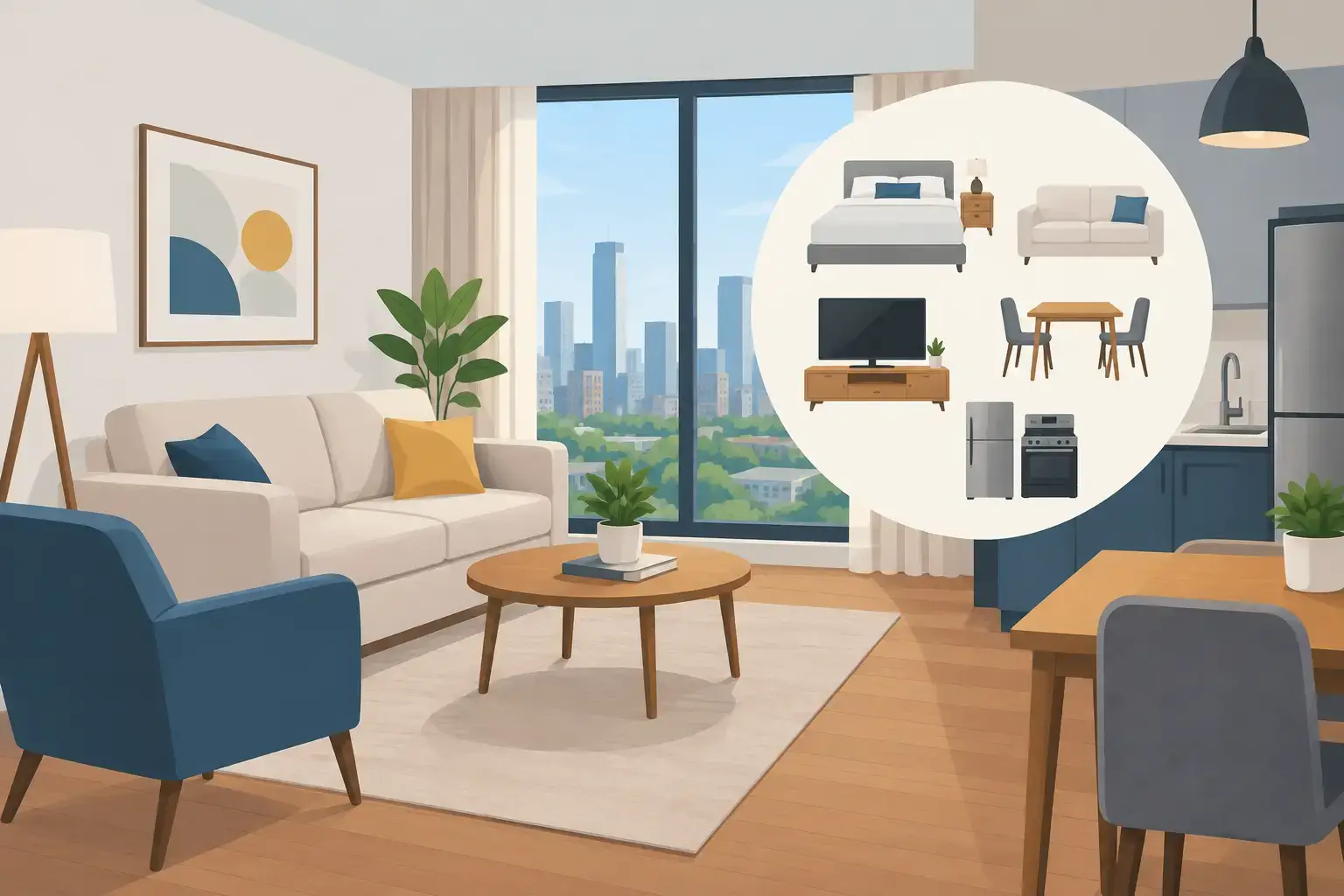
A contractor arriving for a six-week site project does not want to spend their first evening buying a kettle, bedding and a pan. A family between house moves needs somewhere they can cook, wash clothes and settle into straight away. That is why people ask, are short rentals furnished? The usual answer is yes, but the standard of furnishing and the items included can vary widely between properties.
For a stay of a few nights to several months, a genuinely furnished rental should reduce the work involved in being away from home. It should provide the essential furniture, a usable kitchen and the practical items needed for day-to-day living. Before booking, however, it is worth understanding what “furnished” means for the particular property rather than relying on the label alone.
Are short rentals furnished as standard?
Most short-term rentals, including serviced accommodation and many holiday lets, are furnished. They are designed for guests who need immediate use of the property, not tenants who plan to move in their own belongings. You would normally expect beds, seating, a dining area, kitchen appliances and bathroom facilities at a minimum.
That said, furnished does not always mean fully equipped. One property may include quality cookware, linen, towels, Wi-Fi, a washing machine and a workspace. Another may have only the main furniture and basic appliances. A flat can look furnished in photographs while still leaving guests without enough plates for a work team, suitable seating for a family, or equipment for an extended stay.
For corporate bookers, this difference matters. Booking several people into a property that lacks laundry facilities or adequate kitchen equipment can create avoidable costs and disruption. For guests, it can mean spending time and money on items that should have been available from day one.
What a fully furnished short rental should include
A well-managed short rental should feel ready to use when you arrive. In the living and sleeping areas, this generally means beds with mattresses, storage, seating, tables and appropriate lighting. Bedrooms should offer a practical place to unpack rather than simply a bed in an empty room.
The kitchen is often where the value of short-term accommodation becomes clearest. A functional kitchen should include a fridge-freezer, oven or hob, microwave, kettle, cookware, crockery, cutlery and basic cooking utensils. Guests staying for work assignments or relocation periods need to prepare proper meals, not rely on takeaways every evening.
Bathroom provision should include towels and the standard fittings needed for normal use. Many serviced properties also provide initial toiletries, although this should not be assumed for longer stays. Laundry facilities are particularly valuable for contractors, families and guests staying beyond a few days. Where there is no washing machine in the property, ask whether a laundrette or shared laundry room is available nearby.
Other inclusions often make the difference between a basic furnished let and a straightforward, all-inclusive stay. These can include:
- Wi-Fi suitable for work, video calls and everyday use
- Smart TV or television and comfortable living-room seating
- Bed linen and a supply of towels
- Heating, hot water and electricity included in the stated rate
- Parking, where this is available and required
- Regular or weekly housekeeping for longer stays
Not every property will offer every item, and that is not necessarily a problem. A one-night stay may not need a desk or washing machine. A group of engineers staying for two months will likely need both, as well as reliable parking and enough dining space for the number of occupants.
Furnished, serviced and inclusive are not the same thing
These terms are often used together, but they describe different parts of the stay. Understanding the distinction makes it easier to compare properties properly.
A furnished rental has the furniture and household equipment needed to occupy it. A serviced accommodation property usually adds hotel-style operational support, such as housekeeping, linen changes, guest assistance and a responsive point of contact. An all-inclusive rate may cover utilities, Wi-Fi and other running costs that would be separate in a conventional tenancy.
A short rental can be furnished without being serviced. It may contain everything needed to live there, but the guest could be responsible for cleaning, topping up supplies or contacting a remote host if something goes wrong. Conversely, a serviced property should have clear arrangements for guest support, maintenance and cleaning, which can be particularly useful for business bookings.
For a company arranging accommodation across multiple locations, the operational detail can be more important than the furniture itself. One clear invoice, confirmed occupancy dates, a named contact and fast help if a boiler fails are practical advantages that reduce the admin burden on site managers and office teams.
What to check before you book a furnished rental
The listing description and photographs should give a useful starting point, but ask direct questions if an item is essential. This is especially relevant when booking for a group, an extended contract or a relocation.
First, confirm the sleeping arrangements. “Sleeps six” may mean three bedrooms, or it may include sofa beds in a communal area. Check the number of bathrooms too, particularly for worker groups with early starts. A property can have enough beds but still be impractical for the people staying there.
Next, look at the kitchen and laundry provision. Ask whether there is a full oven, fridge-freezer, washing machine, dishwasher and enough cookware for the group size. If the team will be self-catering for weeks, a compact kitchen with two pans may not be sufficient.
Then clarify what is included in the price. Utilities, Wi-Fi, parking, cleaning, linen and towels can affect the true cost of a stay. A lower nightly rate may prove less economical if it excludes essentials or requires frequent additional payments. For longer bookings, also ask about housekeeping frequency and how consumables such as toilet roll, washing-up liquid and bin bags are handled.
Finally, establish how issues are reported and resolved. Every property can occasionally need maintenance. What matters is whether guests have a dependable way to get help, particularly outside normal office hours. A clear contact process is reassuring for individual guests and essential for corporate travel coordinators.
When a furnished short rental is the better option
Furnished short rentals are often a practical alternative to hotels when space, flexibility and cost control are priorities. A hotel room may suit a brief solo trip, but it becomes less convenient when several colleagues need accommodation near a project, or when a guest is staying long enough to want a normal routine.
A house or flat with separate bedrooms, a lounge and kitchen can give a work team room to rest without living out of suitcases. It can also help companies control food and laundry costs. Families benefit from the same space during a move, insurance repair or visit to relatives, while relocating professionals can settle into an area before committing to a longer tenancy.
There are trade-offs. Hotels may offer daily cleaning, breakfast and a staffed reception. Short rentals generally offer more independence, but the level of service differs from property to property. The right choice depends on length of stay, group size, location, parking needs and whether the guest needs a home-like base or a more traditional hotel experience.
A note for landlords considering short stays
For owners, furnishing a property for short-term use involves more than adding a sofa and beds. Durable furniture, appropriate kitchen inventory, quality mattresses, secure storage and easy-to-clean finishes all affect guest experience and ongoing maintenance. The property also needs a reliable system for cleaning, linen, checks and replacing damaged or missing items between bookings.
The aim is not to fill every corner. It is to provide a practical, comfortable space that works for the likely guest. A contractor house needs adequate beds, parking and laundry capacity. A relocation flat may benefit from a proper workspace and a well-equipped kitchen. Professional management helps keep standards consistent while handling the day-to-day work that comes with furnished short stays.
TWS Properties focuses on the details that make accommodation workable, from equipped kitchens and weekly housekeeping to flexible options for business travellers, families and workforce bookings. Before confirming any stay, compare the actual inclusions with how you intend to use the property. The best furnished short rental is not simply one with furniture – it is one that lets you arrive, get on with your work or plans, and feel properly settled from the first night.