
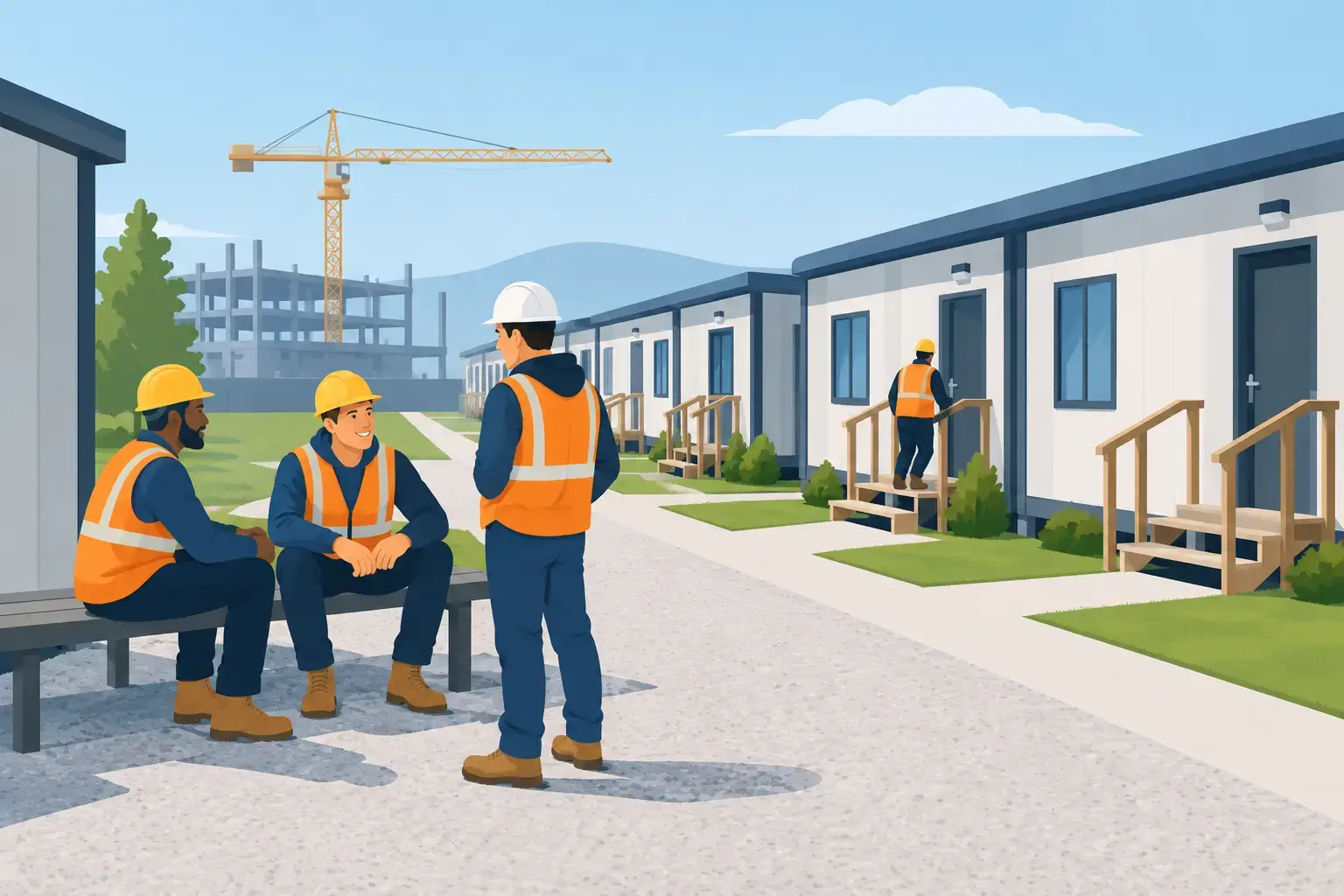
A construction crew housing example is often more useful than a list of accommodation features. When a project manager needs beds for six people near a live site on Monday morning, the real questions are practical: can the team park, cook, rest properly, extend the stay if the programme slips, and contact one person if something changes?
Hotels can work for a short visit or a small leadership team. For trades working weeks or months away from home, however, multiple hotel rooms can become expensive, inflexible and difficult to manage. A furnished house or serviced flat gives the crew the space and routine they need while giving the business clearer control over cost and bookings.
Construction crew housing example for a six-person team
Consider a contractor starting a 12-week refurbishment project in a city centre. The workforce includes a site manager, two joiners, two electricians and a labourer. They travel from different parts of the country and need accommodation from Sunday evening to Friday morning, with the option to stay over some weekends as the programme develops.
Instead of booking six separate hotel rooms, the company secures a four-bedroom house close to the site. Two colleagues are happy to share a twin room, while the site manager has a separate room to handle early calls and paperwork. The property has off-road parking for two vans, a fully equipped kitchen, laundry facilities, reliable Wi-Fi and a living area where the team can eat and relax after work.
The booking is made under one company contact, with one invoice and a defined weekly rate. Housekeeping is arranged weekly, so the property remains presentable without asking workers to spend their rest time managing a house. If the project moves into a second phase, the booking can be extended without moving the team to another location.
This arrangement is not suitable for every crew. Some teams prefer individual bedrooms for privacy, particularly on long assignments. Others work shifts that make shared living less practical. The point is to match the property layout, location and booking terms to the workforce rather than treating accommodation as an afterthought.
Why shared crew accommodation can lower total cost
The nightly room rate is only one part of the cost. A hotel may appear straightforward, but regular restaurant meals, parking charges, laundry, multiple booking references and last-minute changes can add up quickly. A larger serviced property usually gives the team facilities to prepare food, wash workwear and live more normally during the week.
For the employer, a shared property also makes administration easier. One booking, one payment process and one point of contact are simpler than chasing several receipts or coordinating individual changes. This matters when a project has rotating trades, delayed materials or a site schedule that changes at short notice.
Location still needs careful thought. The cheapest property can be poor value if the crew spends an hour each way in traffic or cannot park work vehicles safely. A house slightly outside the centre may be a better option where it has parking, good road access and enough space for the team. In central locations, a serviced flat close to public transport may be the more practical choice.
What a good construction crew housing setup includes
A good property does not need to be luxurious. It needs to work reliably for people who are up early, on site all day and away from their own homes. Bedrooms should have proper beds and storage, not temporary sleeping arrangements. The kitchen should be genuinely usable, with cookware, a fridge, freezer and enough seating for the number of guests.
Wi-Fi is another working requirement, not an optional extra. Site managers may need to complete reports, check drawings or speak with suppliers outside site hours. Teams also value a living space separate from bedrooms, particularly when several people are sharing for more than a few nights.
Parking should be confirmed before arrival, including vehicle size restrictions, permits and the number of available spaces. If on-site parking is not possible, the accommodation provider should be clear about nearby options. The same applies to access arrangements. A late Sunday arrival should not depend on an office being open.
For longer stays, weekly housekeeping and fresh linen can make a meaningful difference. It keeps standards consistent and reduces the friction that can arise when busy colleagues share a property. Responsive maintenance support matters too. A faulty boiler or washing machine is not a minor inconvenience when six workers rely on it.
Planning the booking before the project starts
The most successful workforce bookings begin with a short accommodation brief. The contractor should confirm the expected headcount, preferred bedroom arrangement, project dates, working pattern, vehicle requirements and travel radius from the site. It also helps to identify who can approve extensions or changes before the booking is confirmed.
A provider can then recommend the right mix of houses, flats or individual units. For a larger project, splitting the workforce across two nearby properties may be better than placing everyone in one large house. It gives supervisors more privacy and can accommodate different shift patterns, while still keeping the team close to site.
Be realistic about programme changes. Construction work rarely follows a perfect timeline. Ask whether dates can be adjusted, whether additional guests can be added, and what notice is required if the crew finishes early. Flexible terms are valuable, but they should be understood upfront rather than assumed when a change is already urgent.
It is also worth setting basic house expectations with the crew. Clear guidance on parking, noise, smoking, guests and reporting issues protects both the workers and the property. This is not about adding unnecessary rules. It prevents small problems from becoming costly distractions for the project manager.
When hotels may still be the better choice
Shared accommodation is not automatically the right answer. A two-night inspection visit, a scattered team attending different sites, or a crew requiring complete privacy may be better suited to hotel rooms. Hotels can also be useful where there is no appropriate housing near a remote location.
The decision should come down to duration, team size, travel needs and the standard of living required. For a group of four or more people staying several weeks, a furnished house or serviced accommodation often provides better value and a more stable base. For a short, individual stay, hotel accommodation may be more convenient.
Making crew accommodation easier to manage
The best booking process removes pressure from the person running the project. Rather than spending evenings comparing rooms, chasing invoices and handling maintenance calls, they should have one reliable contact who understands the booking and can respond when plans change.
TWS Properties works with corporate bookers looking for practical, fully furnished accommodation for contractors, construction teams and other workforce groups. The focus is on flexible stays, suitable property options and straightforward support, whether a crew needs a central flat, a larger shared house or accommodation across more than one location.
Give accommodation the same attention as plant, access and materials. When the crew has a clean, well-located and properly managed place to stay, they arrive rested, the business keeps control of its spend, and the project has one less moving part to worry about.