
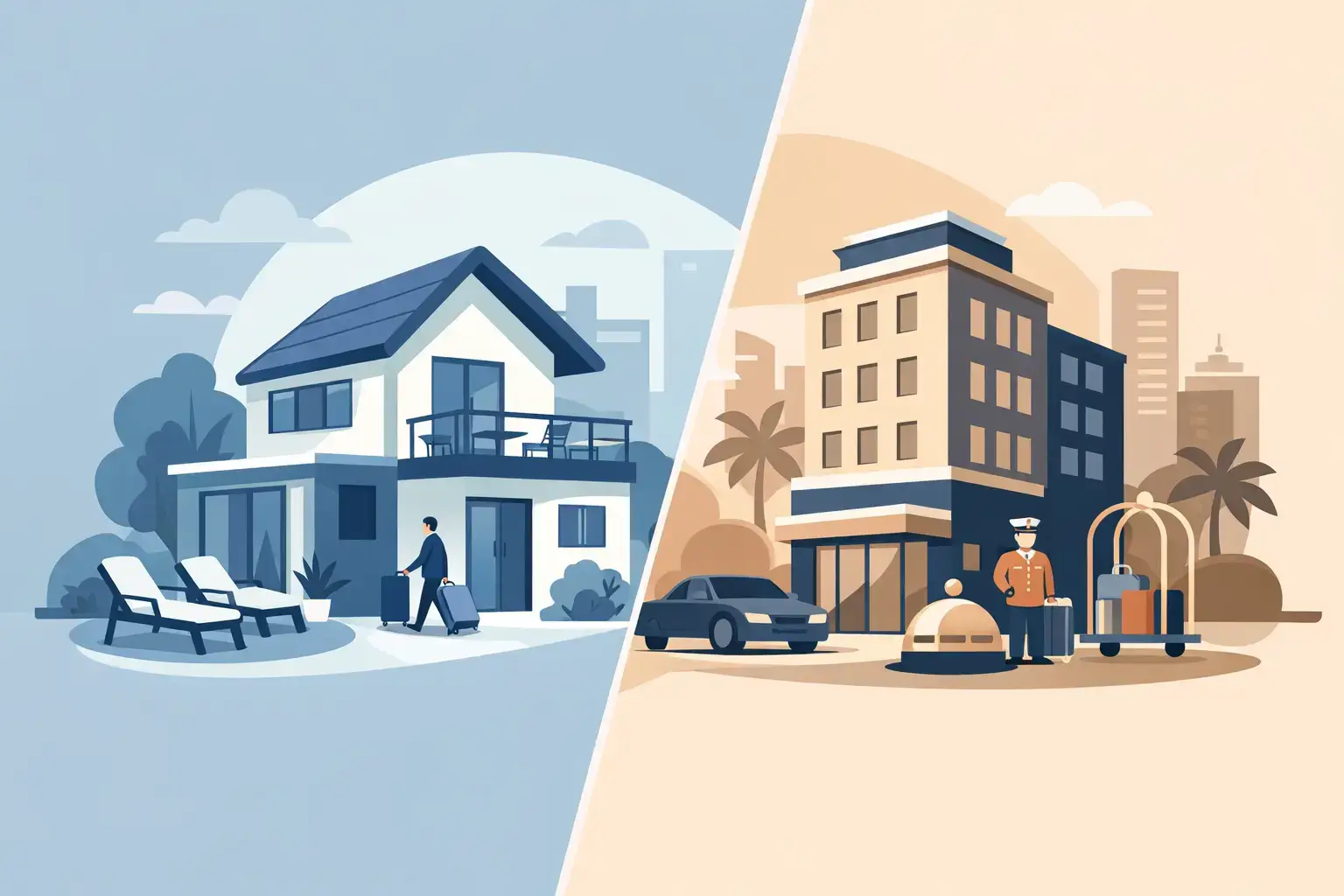
Book a week for one engineer, a month for a relocation, or three rooms for a project team, and the question usually comes up quickly: serviced accommodation vs hotels – which is actually the better fit? The right answer depends on stay length, budget, working pattern and what people need once they get through the door. For some trips, a hotel is still the simplest choice. For many others, especially where flexibility and total cost matter, serviced accommodation is the more practical option.
Serviced accommodation vs hotels: what is the difference?
Hotels are built around short stays and standardised service. You book a room, usually with an en-suite, and shared facilities may include a reception desk, restaurant, bar, gym or meeting areas. It is a familiar format and often works well for one or two nights.
Serviced accommodation is different in how the space is set up and how the stay is managed. Guests typically have a fully furnished flat or house with a kitchen, living area, private bathroom, Wi-Fi and utilities included. Many stays also include housekeeping, parking and a more direct point of contact than a traditional front desk model.
That difference matters because people do not live in a hotel room in the same way they live in a flat or house. If someone is away for more than a couple of nights, wants to cook, needs separate sleeping and living space, or is travelling with colleagues or family, the layout becomes a practical issue rather than a nice extra.
When hotels make more sense
Hotels still suit plenty of travel needs. If a traveller is arriving late, leaving early and only needs a clean room, a bed and breakfast, a hotel can be the most straightforward solution. There is often comfort in knowing exactly what to expect, especially for solo overnight stays in city centres or near airports.
Hotels can also work well where on-site services are a priority. Some guests want a staffed reception 24 hours a day, room service, a restaurant downstairs or conference facilities in the same building. If those services are likely to be used every day, the higher room rate may still make sense.
For company travel policies, hotels can sometimes feel easier because they are familiar. Procurement teams and travel bookers have used them for years, so the process is already embedded. But familiar does not always mean most cost-effective, especially once stays become longer or involve several people.
Where serviced accommodation has the advantage
The strongest case for serviced accommodation is simple: more usable space for the money. Instead of one room with a desk pushed into a corner, guests usually get room to sleep, eat, work and switch off properly. That is valuable for business travellers, but it becomes even more important for contractors, worker teams, relocating professionals and families.
A kitchen is one of the biggest differences. In a hotel, eating out every day quickly adds cost and inconvenience. In serviced accommodation, guests can prepare meals on their own schedule. For an individual on a mid-term stay, that keeps spending under control. For a team staying for several weeks, it can make a noticeable difference to the total booking cost.
Laundry matters too. People staying away for work do not want to overpack or rely on hotel laundry charges. Having a washing machine in the property, or easy laundry access, makes a long stay easier to manage and feel less temporary.
Then there is privacy. In a hotel, shared corridors, reception areas and dining spaces are part of the setup. In serviced accommodation, guests often have their own front door and can settle into a more normal routine. That tends to suit people working shifts, early starts, late finishes or extended assignments.
Cost is not just the nightly rate
A common mistake in the serviced accommodation vs hotels comparison is to look only at headline nightly prices. That gives an incomplete picture.
Hotels often appear competitive for short stays, but the total cost rises when you add meals, parking, laundry and the need to book multiple rooms for groups. A contractor team may each need separate rooms. A family may need two rooms. A relocating employee may need to eat out for weeks. Those extras add up quickly.
Serviced accommodation usually bundles more into the rate. Utilities, Wi-Fi, furnishings and kitchen facilities are already part of the stay, and parking is often available. If several workers can stay in one house rather than across multiple hotel rooms, the savings can be significant. The same applies to a family visiting relatives or waiting for a house move to complete.
That said, serviced accommodation is not automatically cheaper in every case. For one person staying one night with no parking and no meals beyond breakfast, a hotel may still come out ahead. The value shift tends to happen when the stay gets longer, the booking gets larger, or the guest needs more than just a bed.
Best for business travellers and corporate bookers
Business travel is where the choice becomes more strategic. A sales representative on a one-night stopover has different needs from a site manager based near a project for eight weeks. Group bookings for construction teams are different again.
For corporate bookers, serviced accommodation is often easier to manage when flexibility is required. Start dates move. Projects overrun. Staff numbers change. People need to be near one site this month and another next month. Booking a practical, furnished property with a kitchen, parking and enough room to live in properly is often a better operational decision than repeating hotel bookings week after week.
This is especially true for contractors and workforce accommodation. Teams need somewhere comfortable, functional and close to site, not a hotel setup designed mainly for short leisure or overnight corporate stays. Houses and larger serviced properties can also keep teams together, which simplifies transport and day-to-day coordination.
For companies trying to balance staff welfare with cost control, that combination matters. Better rest, more space and lower meal spend can improve the overall experience without increasing the total booking budget.
Best for families, relocations and longer stays
Families rarely get good value from hotels unless the trip is very short. One room can feel cramped quickly, while two rooms increase cost and separate everyone. Serviced accommodation offers a more practical layout, especially where children, luggage and longer stays are involved.
The same applies during relocation. Someone moving for work, waiting for a tenancy to begin or between property completions does not usually want to live out of a hotel room. They need a temporary home base where they can cook, work, unpack and keep some normal routine. A furnished flat or house gives them that breathing space.
Mid-term stays sit in the same category. They are too long for a hotel to feel comfortable and too short for a standard tenancy to make sense. This is where serviced accommodation fills the gap well.
The trade-offs to think about
There is no point pretending one model is better in every situation. Hotels provide consistency, visible staffing and convenience for very short stays. Serviced accommodation offers more space, flexibility and better living conditions for longer or more complex bookings.
The main trade-off is service style. A hotel gives guests immediate access to on-site staff and amenities. Serviced accommodation is usually more independent. For many guests that is a benefit, but some travellers prefer the structure of a hotel environment.
Location can vary as well. Hotels are often concentrated in obvious commercial centres. Serviced accommodation may offer more choice across residential and mixed-use areas, which can be useful for site access, local parking and a quieter stay, but the best option depends on where the guest actually needs to be.
How to choose between serviced accommodation and hotels
The simplest way to decide is to look at the real use case rather than the label. Ask how long the stay is, how many people are travelling, whether they need parking, whether they will cook, and how much time they will spend in the property. Think about the full cost, not just the room rate.
If the booking is short, simple and centred on one person sleeping near a meeting location, a hotel may be right. If the stay runs beyond a few nights, includes a team, involves relocation, or needs a more practical living setup, serviced accommodation usually becomes the stronger option.
That is why many guests and corporate bookers are moving away from seeing hotels as the default. They are looking at what actually supports the stay properly. In many cases, that means choosing space, flexibility and lower overall cost over a room that only works for sleeping.
A good booking decision should make life easier after check-in, not just at the point of reservation.